A nurse finishes explaining the medication plan after discharge, and the patient says “OK.” Does that mean understood, agreed, or wanting to end the conversation quickly? If researchers keep only recollections from after the interview, it is hard to return to the interaction as it happened. Audio and video recordings preserve communication data at different levels; which to choose should start from the question to be answered, and then collection, transcription and analysis can be arranged.
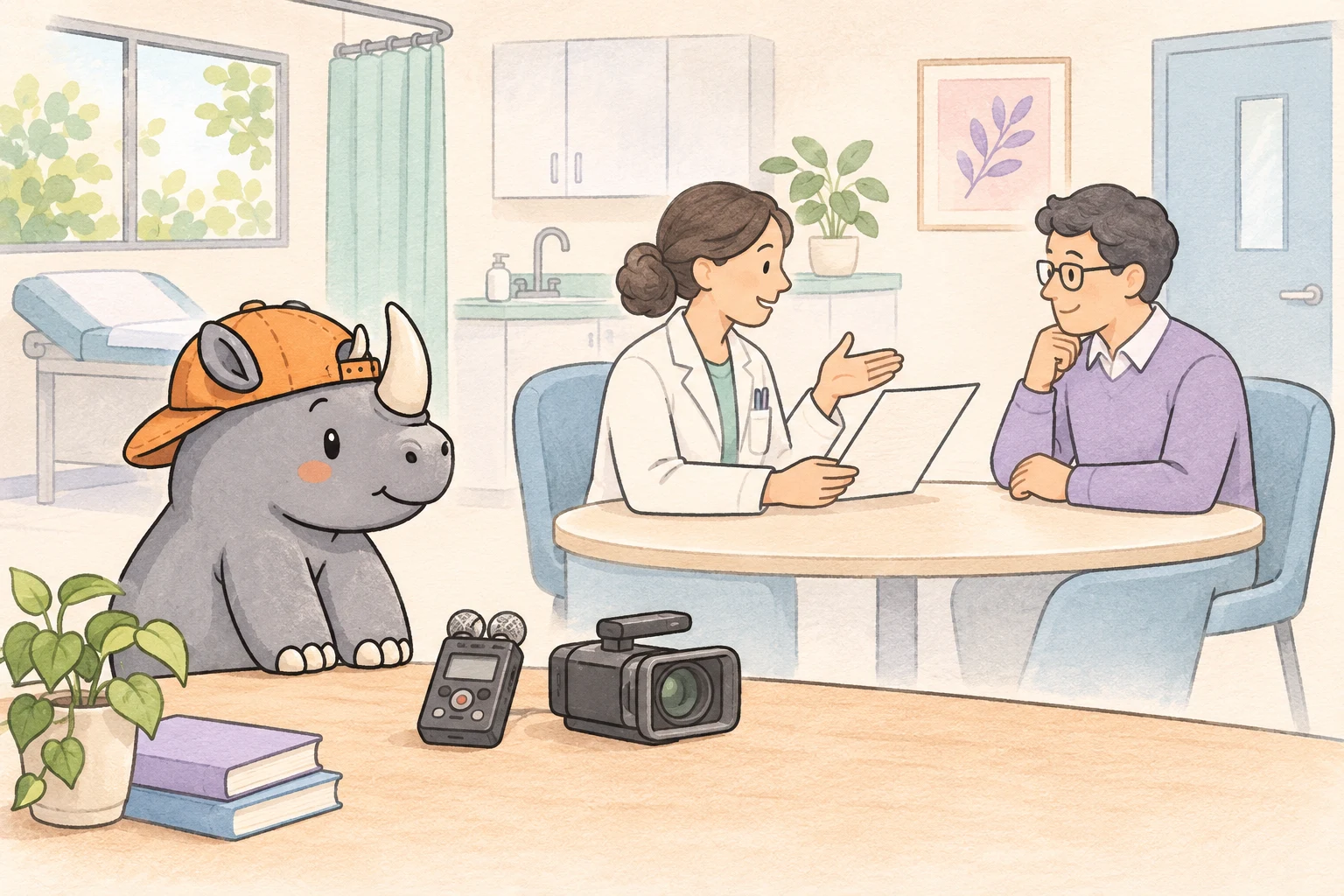
Figure: choosing a recording method for communication research. An original hand-drawn illustration by Scholay (AI-assisted).
First Narrow the Research Question to a Single Interaction
Take a proposed study of discharge instruction, in which the researchers want to know how nurses respond after a patient raises a question. The question can be narrowed further: did the nurse ask what was confusing, did the nurse invite the patient to restate the plan in their own words, and did the subsequent exchange resolve the original question? The object of analysis then changes from a vague “quality of communication” to an interaction that can be located.
In their 2026 methodological discussion paper[1], Sundler and colleagues link the preparation, recording methods, participant recruitment and on-site collection of audio- and video-based observation. It offers methodological advice, not a comparative trial proving that video is better than audio. For one's own study, the first thing is to explain why on-site recording is needed and which interaction details are necessary to answer the question.
One recording can contain many topics, so the start and end of the range must also be defined. If the study concerns responses after a patient's question, “patient asks—nurse responds—patient reacts again” can be taken as the initial unit of observation; if the next round raises a new question, keep the continuation. Do not cut exactly at a point that removes the preceding or following talk that could change the interpretation, just to produce segments of equal length.
Audio and Video Preserve Different Information
Audio can usually preserve what was said, pauses, tone and overlapping turns. If the focus is the way questions are asked or the order of explanations, it may already supply the main material. Video adds visible gaze, gestures, posture and the use of objects, and is also limited by the framing. If a patient looks at a family member outside the frame, the camera may capture only a head turn.
Consider a constructed observation segment: the patient says “Do I still take this after meals?”, the nurse answers “Yes,” and at the same time points to a different medicine on the paper. With only the text, it is easy to read the response as a plain confirmation; with clear sound and movement records added, one can check whether the two are talking about the same object. A single movement cannot be used to conclude that the patient has understood; the interaction that follows still has to be examined.
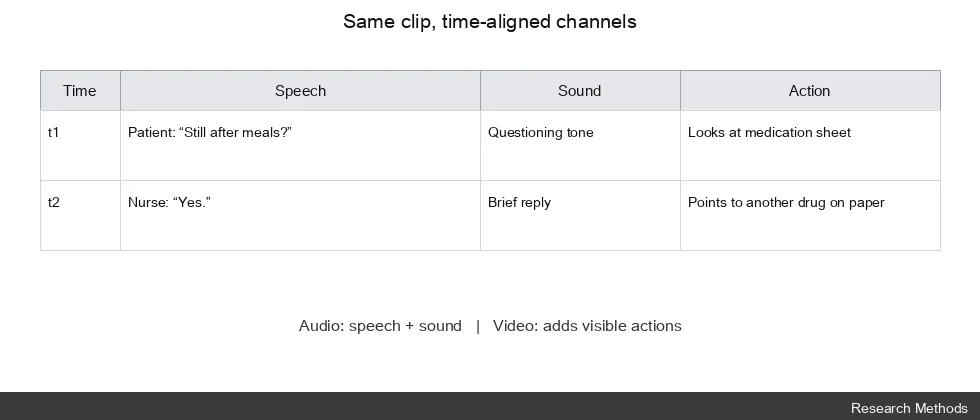
Figure 1 | Multi-track record of a constructed segment. Text, sound and movement are arranged in the same time order to help review references and responses; it does not correspond to any recording of a real patient.
When choosing equipment, a rehearsal can check three questions: can both parties' voices be told apart, do the necessary movements enter the frame, and can recording continue after people at the scene move. The recording method should serve the research question; more footage also means more processing work and more identifiable information to protect.
Keep One Thread from Collection to Analysis
This proposed study can first define the instruction scenarios to be included, the participants and the sampling method, and then arrange equipment positions and a pause procedure. Before formal recording, explain the purpose, the scope of access and the withdrawal arrangements to the relevant participants in easy-to-understand terms, and obtain consent in line with applicable ethics approval and institutional requirements. When new participants or sensitive situations arise on site, there should be a clear way to pause and handle them.
After recording, assign study IDs to the files and manage the identity key separately; keep the original files and analysis copies, and restrict access. Transcripts are marked by time; if the specific analysis depends on pauses, overlapping speech or movements, keep that information rather than polishing the whole dialogue into smooth paragraphs. Automatic transcription can help produce a first draft, but key segments still need to be checked against the original recording.
Then choose an analytic method consistent with the question. If the concern is how an interaction unfolds step by step, look closely at the turns before and after the question; if the frequency of a certain kind of response is to be counted, first define the behavior and the counting unit, try out the coding rules and resolve disagreements. Multiple exchanges by the same nurse cannot be treated indiscriminately as many independent nurses.
Let Conclusions Match the Interaction Actually Seen
The camera records events within its frame, and the audio records the sounds the equipment can pick up. Utterances that cannot be made out should be kept as missing in the analysis material, and movements outside the frame cannot be filled in as facts already observed. A patient's “OK” can enter the analysis of the interaction, but it cannot directly replace a measurement of understanding.
You should also report who was willing to take part, which situations were not included, and how the equipment was placed on site. People who know they are being recorded may adjust how they express themselves, and those willing to be videotaped do not necessarily represent all patients. Only when these collection conditions are presented together with the results can readers judge which communication settings the findings apply to.
Such studies ultimately connect an observable question, a suitable recording method and a traceable unit of analysis. Decide first what needs to be seen clearly, then choose equipment that can preserve that information, and the recordings will become analyzable evidence.
References
-
Sundler, A. J., Östman, M., Hedén, L., Holmström, I. K., & van Dulmen, S. (2026). Advancing methodological guidance for audio- and video-based observational studies of communication in nurse–patient encounters: A discussion paper. International Journal of Nursing Studies Advances, 11, 100627. DOI.
-
Research Methods · Rituals can be imitated; understanding cannot be faked
-
Compiled and published by the Scholay all-in-one academic platform. Please contact us to have it taken down in case of infringement.
-
Also published at Enter Scholar, a scholar community for the age of intelligence